Understand how your mind and body work together, and why cultivating physical awareness is a key pillar of deep relaxation.
Mind & Body
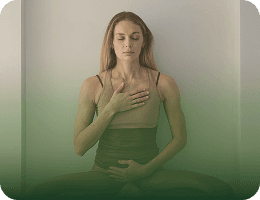
Have you ever noticed how stress physically feels in your body?
Perhaps your shoulders shrug up. Your breathing becomes shallower, your jaw clenched, or you feel a subtle restlessness, even though you are actually sitting still.
Equally, you likely know the opposite experience: after a walk in nature, a massage, or a few deep, conscious breaths, it’s not just your body that feels lighter. Your thoughts, too, often begin to settle and quiet down.
This exact interplay between physical sensation and mental well-being is what we call the mind-body connection.
What is the Mind-Body Connection?
The term mind-body connection describes the profound link between our physical self and our mental state. Thoughts, emotions, and physical reactions don’t happen in isolation. They are constantly in dialogue, influencing one another in real time.
A stressful thought can immediately manifest physically. At the same time, a mindful physical experience—such as slowing your breath, moving gently, or enjoying a comforting touch—can deeply shift how you feel mentally.
Simply put:
Our thoughts can directly influence our physical body.
Our physical state shapes our mental and emotional experience.
Emotions are rarely just thought; they are felt and processed physically within the body.
Body and mind do not work in isolation. They exist in a state of continuous, beautiful exchange.
How Stress Manifests in the Body
When we are under pressure, our body reacts instinctively. The nervous system prepares for heightened alertness and peak performance.
While this is highly beneficial when tackling an acute challenge, many high-performing professionals notice that this physical tension doesn’t simply switch off once the workday ends.
Typical physical signals of stress include:
Tightness in the shoulders and neck muscles
A clenched or tense jaw
Shallow, rapid chest breathing
An accelerated heart rate
An underlying sense of inner restlessness
Difficulty quietening the mind and switching off
The feeling of constantly being "on" and holding tension
In a fast-paced environment, these subtle cues are often overlooked. We continue to perform and deliver, only realizing how exhausted or tense we truly are once we finally try to rest in the evening.
Why Cultivating Somatic Awareness is Crucial
Somatic awareness, or body perception, is the practice of consciously tuning into your physical sensations. This includes tuning into:
The natural rhythm of your breath
Subtle muscle tension
Posture and movement
Physical touch and contact
Sensations of warmth or coolness
The grounding sensation of your body resting on a surface
Daily life constantly pulls our attention outward: toward deadlines, screens, notifications, and the next goal. As a result, our body's internal signals are often pushed into the background.
Reclaiming a conscious connection to your body helps you recognize early on when your nervous system needs a pause. It creates a gentle space of alignment:
How am I actually feeling right now?
Where am I holding onto tension unconsciously?
What does my system need in this exact moment?
This is not about over-analyzing every physical sensation. Rather, it is about welcoming your body back as a reliable, wise source of information for your well-being.
Shifting from Thinking to Sensing
Many of us spend the vast majority of our day "in our heads"—planning, organizing, analyzing, and mentally jumping from one complex task to the next.
Even during moments of rest, this mental loop often continues running in the background. The workday is technically over, but the mind is still solving problems. The body is sitting on the couch while the mind is already structuring tomorrow.
True relaxation, therefore, rarely begins by simply trying to "think less." Instead, a far more effective path is to gently guide your awareness downstream, into physical sensation.
For instance, try focusing on:
A single, slow, conscious breath
The gentle rise and fall of your chest or belly
The grounding contact of your feet on the floor
A mindful, fluid stretch
The weight of your body supported by the chair or floor
Consciously releasing and dropping your shoulders
These micro-moments of somatic mindfulness help draw your energy out of the mental loop and anchor you back into the present moment.
The Vital Role of Your Nervous System
The bridge between body and mind is governed by your nervous system. It constantly monitors your internal and external environment, adapting your physiology to keep you safe and balanced.
Under pressure, your sympathetic nervous system activates, priming you for action. Your heart rate, muscle tension, and alertness shift to meet the demand.
Conversely, when you feel safe, calm, and grounded, your parasympathetic nervous system takes over, allowing your body to enter a state of deep rest, recovery, and cellular regeneration.
This is why relaxation is not simply a cognitive decision. Your body must receive physical, somatic cues that signal safety and quiet to the nervous system.
It explains why we cannot always switch off on command—even when we logically know our tasks for the day are complete.
Leveraging a Multisensory Approach to Rest
Our brain processes our reality through multiple sensory channels: sound, vision, movement, and touch.
When we engage multiple senses mindfully, an experience becomes richer and more grounding. Take a guided breathing practice, for example: you listen to a soothing voice, feel the physical expansion of your breath, and observe the rhythmic movement of your body.
Using a multisensory approach is highly effective for soothing the nervous system. Combining auditory feedback with somatic awareness and gentle touch can wonderfully anchor your attention in the present moment.
Especially for those who find silent, seated meditation challenging, this somatic pathway offers an accessible, practical gateway: relaxation is no longer just a concept to achieve, but a physical experience to be felt.
How to Strengthen Your Mind-Body Connection Daily
You don’t need to spend hours in silent meditation or restructure your entire schedule. Incorporating small, intentional somatic breaks can naturally restore your connection to your body.
1. Simply Check in With Your Breath
Take just sixty seconds to observe: Is your breath shallow and high in the chest, or is it deep and relaxed? Don't try to change it right away—simply witness it with kindness and curiosity.
2. Practice a Quick Somatic Body Scan
Gently guide your attention through your body: feet, legs, belly, back, shoulders, and face. Where does it feel open and relaxed? Where do you notice your body holding onto tension?
3. Design a Conscious Work-to-Home Transition
Avoid jumping straight from your last work email into your evening routine. Give yourself a few minutes of screen-free transition time to consciously land in your physical space and decompress.
4. Embrace Mindful Movement
A peaceful walk, a slow stretch, or intuitive movement can beautifully shift energy from your head back into your body. This isn't about physical performance or exercise; it’s about moving solely for the joy of feeling your body move.
5. Explore Guided Somatic Practices
Guided breathwork, progressive muscle relaxation, and body scans provide a supportive structure. They offer your mind a gentle focus, allowing you to step away from the urge to be productive for a few restorative minutes.
Mind-Body Connection in Everyday Life
The mind-body connection is not just an abstract concept; it is an active, living experience that unfolds in your day-to-day life.
Each time you consciously drop your shoulders during a stressful meeting, take three slow diaphragmatic breaths, or take a moment to sense your feet on the ground, you are actively nurturing your neural pathways of well-being.
It is not about doing these practices perfectly. It is about consistently offering yourself small, nourishing moments of somatic pauses to check in with how you are truly doing.
In Conclusion: True Rest Begins in the Body
The mind-body connection represents a beautiful, reciprocal dance between physical safety and mental clarity. Just as stressful thoughts shape our posture, conscious breathing, mindful touch, and physical awareness have the power to calm our nervous system and quiet our minds.
By learning to listen to your body's early whispers, you can navigate stress with greater resilience and intention, creating deep, sustainable space for recovery.
True relaxation does not always begin with a thought.
Often, it begins with a single deep breath, a gentle stretch, or the simple, profound sensation of arriving back home in your body.